

Albatrosses, including the iconic wandering albatross with its record-breaking wingspan, are facing serious threats to their survival. With more than 100,000 albatrosses dying annually as a result of bycatch in longline fisheries, combined with invasive predators and disease, these majestic seabirds are in urgent need of effective conservation actions.
Our citizen science campaign, launched as part of the Wildlife from Space initiative, aims to track albatross populations using high-resolution satellite imagery. This project allows members of the public to join the search for albatrosses from their own homes, contributing to crucial data on albatross abundance and breeding patterns without disturbing the birds or requiring costly on-ground visits.
Project Objectives
The campaign’s primary goals are to:
- Establish reliable population estimates by using satellite imagery to count individual albatrosses, corrected for non-breeding individuals.
- Provide consistent, wide-scale monitoring for hard-to-reach albatross colonies.
- Inform conservation measures by assessing whether albatross populations are stabilising, recovering, or still declining, despite conservation efforts.
This satellite-based method offers a non-intrusive, cost-effective solution to monitor expansive and remote areas, providing a valuable complement to traditional field and aerial surveys.
Our project monitors wandering albatrosses on South Georgia: This vulnerable species has been in decline for decades, particularly on Bird Island, which houses around 60% of South Georgia’s population. The Government of South Georgia and the South Sandwich Islands (GSGSSI) and the Agreement on the Conservation of Albatrosses and Petrels (ACAP) have prioritised archipelago-wide censuses to be conducted every decade. Satellite imagery has the potential to expand these monitoring efforts to previously unsurveyed locations, including Annenkov Island.
Albatrosses from Space: Citizen Science in Action
In our online citizen science campaign, volunteers from around the world joined forces with researchers to analyse satellite images and identify albatrosses at 24 breeding colonies across South Georgia. Their participation helps scientists gather data on albatross distribution, providing insight into the status of the population over time. This collaborative approach not only makes use of public enthusiasm for conservation but also enhances scientific capacity for monitoring large datasets.
We envision that this initiative will expand to include additional albatross species in the near future, bringing us closer to the world’s first global albatross census. With the public’s help, we can gather the information needed to protect these extraordinary birds for generations to come.

Why Satellites?
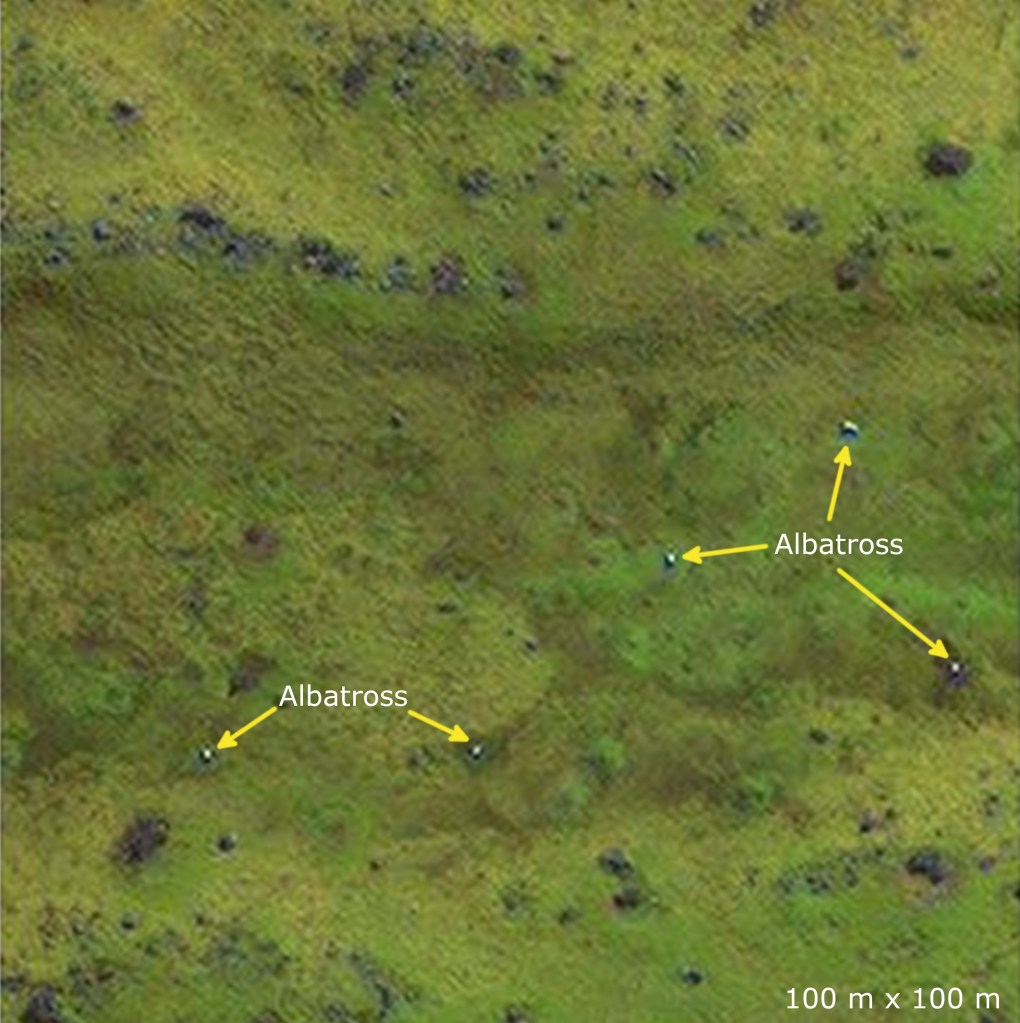
Using satellite imagery offers unique advantages in tracking these remote and elusive seabirds. Very High-Resolution (VHR) satellite images enable scientists to count individual albatrosses, which appear as white or cream-coloured dots on the landscape. This method is especially promising for monitoring breeding sites that are otherwise difficult to access, and it has minimal impact on the birds themselves.
Satellite surveys also support conservation by lowering the carbon footprint of traditional methods, making it easier to reach net-zero targets for conservation projects. The data from these surveys can inform policy on fishing practices and invasive species management, ultimately guiding efforts to protect these seabirds from further decline.
Project Partners and Funding
The Albatrosses from Space project is led by the British Antarctic Survey, in collaboration with the GSGSSI, South Georgia Heritage Trust (SGHT), the Royal Society for the Protection of Birds (RSPB), and BirdLife International. Funding and additional resources are provided by the Darwin Plus Initiative. You can follow updates and learn more about this campaign on Darwin Plus’s Twitter (@darwin_defra) and Facebook pages (@Biodiversity Challenge Funds).
This citizen science campaign offers everyone a chance to contribute directly to the conservation of albatrosses, helping to secure a brighter future for these iconic seabirds. Join us and take part in preserving one of the most remarkable inhabitants of our world’s oceans!
 Marie Attard