
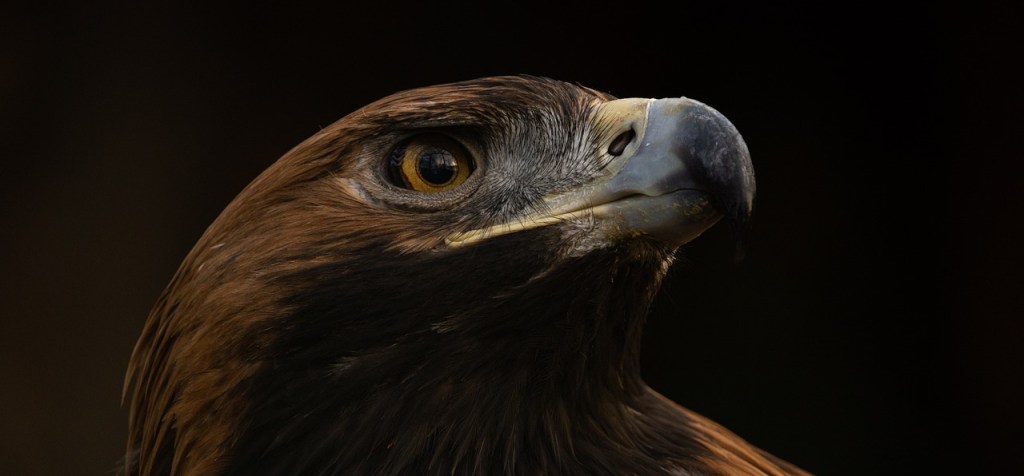
Image by Jevgeni Fil from Pixabay
Haast’s eagle Harpagornis moorei was once the largest known eagle, weighing in at 20 kg – nearly 50% heavier than the largest modern eagles. This fearsome predator, now extinct, was capable of taking down prey much larger than itself, including the giant moa, which weighed between 20-200 kg. However, there has been much debate among scientists regarding its hunting and feeding behaviour.
Some earlier theories suggested that Haast’s eagle may have been more of a scavenger, like vultures, based on its beak and skull morphology. Others believe that it was an active hunter, capable of capturing large prey. In this study, we aimed to investigate whether Haast’s eagle was indeed capable of killing and feeding on large-bodied prey, and to better understand its feeding behaviour in comparison to modern-day birds of prey.
How We Studied Haast’s Eagle’s Feeding Ability

To assess the feeding capabilities of Haast’s eagle, we focused on the biomechanical performance of its skull and talons. In living birds of prey, such as eagles and vultures, the shape of the skull and talons is closely linked to their feeding behaviour. Using advanced 3D modelling and finite element analysis (FEA), we created detailed digital models of Haast’s eagle’s skull and talons. We then compared these models to those of modern-day predators and scavengers shown in the table to simulate how Haast’s eagle would have behaved during feeding and hunting.
We used simulations to test how Haast’s eagle would have performed under various scenarios, including simple biting, lateral shaking, pulling (both posterior and dorsoventral movements), and talon flexion and gripping. These simulations provided us with insights into how the eagle’s skull and talons would have been able to handle the forces involved in capturing and consuming large prey.
What We Found: Haast’s Eagle as a Powerful Predator and Scavenger
Our findings revealed that Haast’s eagle was likely a hybrid of both an active predator and a scavenger. The eagle’s skull shape, which closely resembles that of vultures, suggested it might have used similar feeding techniques to vultures, such as tearing into large carcasses after they had been killed. However, its beak was more similar to that of modern eagles, indicating it had the strength to deliver powerful bites when killing prey.
Interestingly, Haast’s eagle’s biomechanical performance was more similar to modern eagles when simulating biting actions, but when it came to simulating prey capture and killing, its performance was closer to that of the Andean condor Vultur gryphus, a large scavenger. This suggests that Haast’s eagle may have been capable of killing prey larger than itself, such as the moa, and then used feeding methods more typical of vultures to consume the carcasses.
The Talons: A Key Adaptation for Powerful Gripping
Another crucial finding was in relation to Haast’s eagle’s talons. Despite its enormous size, the eagle’s talons were similar in structure to those of modern eagles, and were capable of withstanding extremely high forces. This indicates that Haast’s eagle had the physical ability to grasp and hold onto large prey, further supporting the idea that it hunted large animals like the moa.
Conclusion: A Unique Feeding Strategy
In conclusion, our study supports the idea that Haast’s eagle was an apex predator capable of taking down large prey. However, it also employed scavenging methods typically used by vultures to feed on the large carcasses of animals. The combination of strong, eagle-like talons and vulture-like skull and beak features suggests that Haast’s eagle was uniquely adapted to hunt large prey and consume it in a way that differed from modern-day eagles. This proposition is also consistent with a Maori rock art depiction of what is thought to be a Haast’s eagle in the Cave of the Eagle at Craigmore Station, South Island. The raptorial bird has a dark-coloured body, but the head and neck remain uncoloured.
These findings offer new insights into the feeding ecology of this extinct bird, shedding light on how it was able to survive and thrive in prehistoric New Zealand.

 Marie Attard