
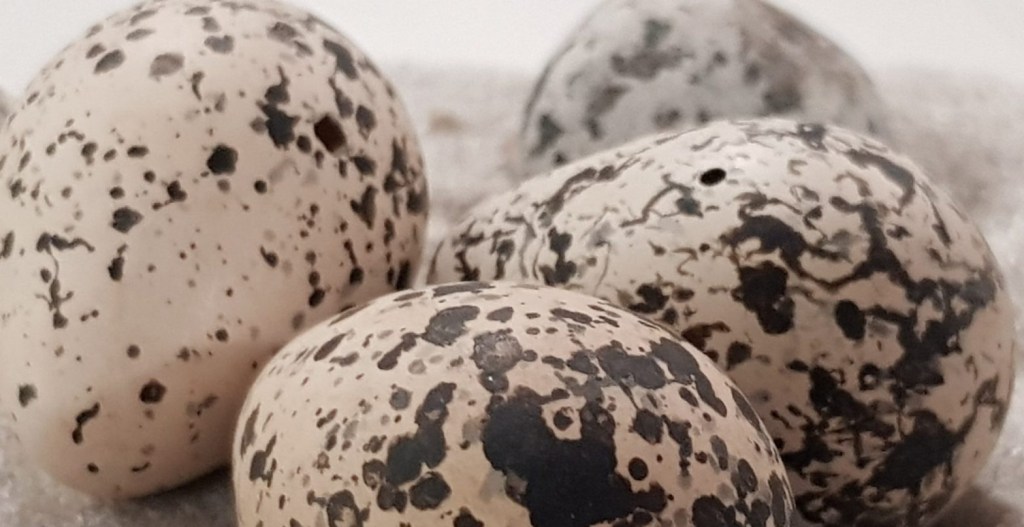
Bird embryos rely on their eggshells for the careful exchange of water vapour and gases essential to their survival. This exchange process—called eggshell conductance—is surprisingly sensitive to environmental factors, and it varies across bird species that breed in vastly different habitats. Our recent research explores how climate and life-history traits influence eggshell conductance, aiming to understand how this feature has evolved to optimise embryo development in diverse and sometimes harsh conditions.
How Does Eggshell Conductance Work?
Eggshell conductance refers to the ability of an eggshell to manage water vapour and gas movement between the developing embryo and the environment. This regulation is especially crucial because embryos can only survive in a narrow range of moisture and oxygen levels, which can be disrupted by temperature changes, humidity, and other environmental conditions.
The evolution of eggshell conductance appears to be finely tuned to these environmental pressures, suggesting that birds have adapted their eggshells over millions of years to support embryos in specific climates. We set out to determine which life-history traits and climate conditions most significantly shape eggshell conductance across bird species.
Conducting the Research
Our study examined water vapour conductance in eggs from 364 bird species, chosen to represent a wide range of body sizes, habitats, and phylogenetic backgrounds. These eggs, sourced from the Natural History Museum at Tring, were filled with water and weighed regularly to measure water loss over time under controlled conditions.
Using phylogenetic comparative methods, we compared these measurements across species to analyse how body mass, climate, and life-history traits influence eggshell conductance.
Key Findings: Climate, Body Size, and Parental Care
Our findings revealed three major factors that shape eggshell conductance:
- Body Size: Larger birds typically have thicker eggshells, which impacts conductance rates. This trait provides more consistent control over the internal environment of the egg, which is especially beneficial in variable climates.
- Temperature Seasonality: Birds that breed in high-latitude regions, where temperatures fluctuate dramatically, tend to have eggs with lower conductance. This adaptation likely reduces water loss during periods of suspended embryo growth, helping prevent dehydration when incubation may be temporarily halted due to extreme cold.
- Parental Care Patterns: In species where both parents share incubation duties, the nest temperature remains more stable, allowing for lower eggshell conductance. Conversely, in species where only one parent incubates, higher conductance may be necessary to cope with temperature changes as the egg is left unattended at times.
Evolutionary Implications
By taking a broad look across the avian family tree, this study offers new insights into how life-history traits and climate shape fundamental features of bird eggs. The diversity of eggshell conductance patterns highlights how birds have fine-tuned this trait to support embryo survival across a range of environmental extremes.
 Marie Attard